

Imagine what authors go through, taking risks while exposing the rich and powerful, only to see their books die shortly after they are published. Their publisher may have told them “Too bad. Your book has had its run.” Or “Sorry, it just didn’t catch on.” This is not the kind of verdict authors want to hear, especially after spending years pouring heart and soul into researching and writing a book to inform an uninformed public.

The pain and suffering experienced by these truth-tellers is seldom acknowledged. They may have sacrificed career opportunities, building a family, buying a home, all for writing out of a sense of duty to the public’s right to know, often suffering financially and at great personal cost to their loved ones. What makes their ordeal all the more excruciating is that they often come to believe that their books’ “failure” is their own failure, not knowing that their publisher secretly deep-sixed the book before it had a chance to compete in the “free marketplace of ideas.”
There is a word for this book suppression practice. It is called privishing, which means “to privately publish a book so it “sinks without a trace.” It happens when the publisher deliberately shortens the book’s life span by cutting its advertising budget, the author’s book tour, and the book’s print run.
My husband, Gerard Colby, and I discovered privishing while investigating what happened to his 586- page exposé, DuPont: Behind the Nylon Curtain. The New York Times Book review hailed it on page one as “something of a miracle … sculpture hewn out of the side of a mountain.” This and other great reviews did not sit well with the family that had come to be known as the Merchants of Death: the du Ponts of Delaware.
The DuPont book, originally published by Prentice-Hall in 1974, is a unique, unauthorized history of the DuPont Company, the duPont family, and America itself. It quickly took off in Delaware, (famously described by Ralph Nader as the “Company State,”) with long lines of purchasers waiting outside bookstores to get a copy. The Wilmington Delaware Inquirer reported that “bookstores couldn’t keep the book in stock after the Wilmington Morning News carried a front page story about a telephone call criticizing the “most unflattering book about the chemical giant.” And then, suddenly, the book died.
Now, some 5 decades later, Colby recently was honored at the14th Annual Whistleblower Summit and Film Festival at the National Press Club in Washington, DC. for his decades-long efforts at exposing privishing and trying to protect authors from this perfidious practice that can be ruinous to their careers.. Seeing Jerry tell his story to an audience of whistleblowers and writers at the National Press Club was a wonderful moment in our 50 years together as investigative journalists. Never have I seen him happier for getting some well-deserved recognition for his book and the years of litigation that followed against his publisher and the subject matter of his book, Du Pont Company.
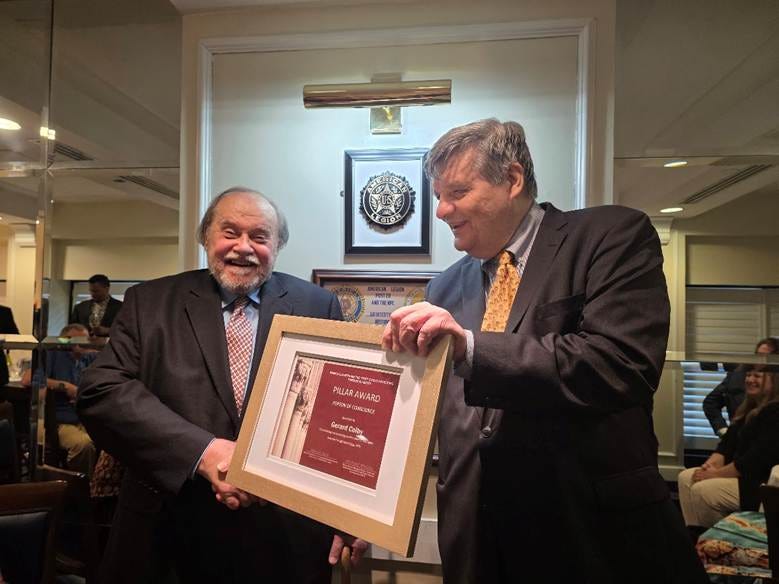
Andrew Kreig presents the Pillar Award to Jerry Colby. Photo by Jerry Ashton, who won the Pillar Award in 2025 for exposing the predatory practices of the debt collection industry.
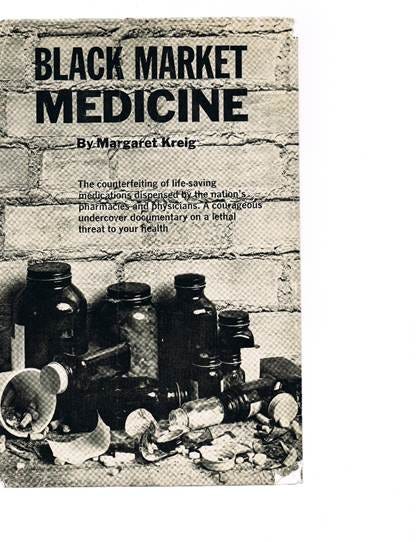
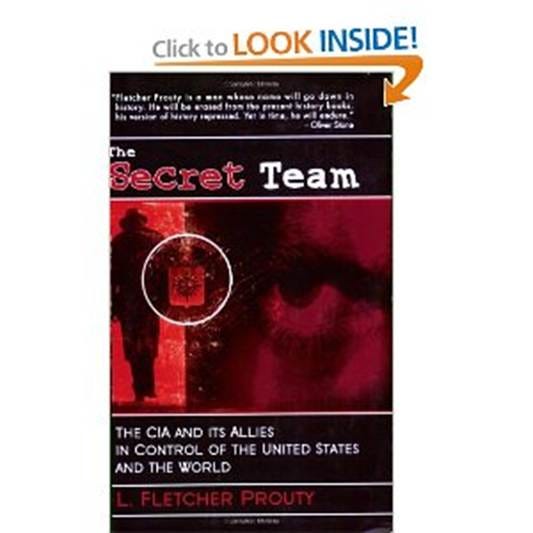
Better still, the person to present the award was perfectly suited for the job. Andrew Kreig, who is a long-time member of the Whistleblower Summit host committee and an author, journalist, lawyer and director of the Justice Integrity Project, revealed, while presenting Jerry with a Pillar [of civil society ] Award, that his own mother, Margaret Kreig, had long wondered what had happened to her book, Black Market Medicine, published by Prentice-Hall in 1967. Ditto for Fletcher Prouty after Prentice-Hall likely privished his 1973 book, The Secret Team: The CIA and Its Allies in Control of the United States and the World. The only difference, Kreig acknowledged to this writer, was that they didn’t know about privishing, which happens in secrecy at the highest levels.
Book Rescue Missions: A Brief Preface to Colby’s Remarks
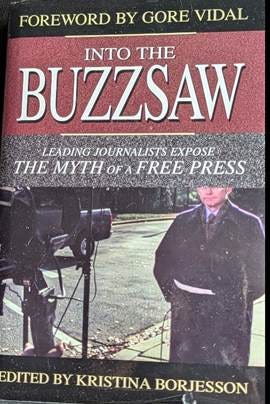
I should add that Lyle Stuart rescued Jerry’s book, and in 1984, published an updated version, DuPont Dynasty: Behind the Nylon Curtain, having urged him to write his heart out about what happened to the earlier edition -- only to privish it later! As Jerry revealed in the lead essay of Into the Buzzsaw: Leading Journalists Expose the Myth of a Free Press (2002, Prometheus Press, editor, Kristina Borjesson) “the only information Stuart’s company would provide later was that they had learned that their print jobber allegedly received 80% of its business from Prentice Hall.”
Finally, Mark Crispin Miller, retired NYU professor of media studies rescued DuPont Dynasty from oblivion. Along with 26 other books, it circulates freely within “The Forbidden Bookshelf,” published by OpenRoadMedia.
:
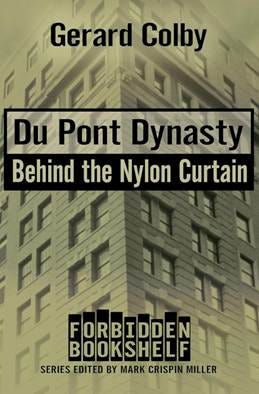
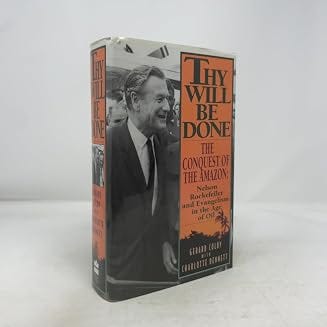
This phenomenal series was created by Miller to bring vanished works back to life. An important segment on The Forbidden Bookshelf will appear in a feature-length documentary Reading the World. The Life and Times of Mark Crispin Miller, directed by his wife, Amy Smiley, and will prominently feature DuPont Dynasty and Thy Will Be Done. DuPont Dynasty is still earning e-book royalties; the hardcover edition is now a collector’s item currently selling on Amazon at $360.00.[Who benefits, I wonder?] Our joint project, Thy Will be Done. The Conquest of the Amazon: Nelson Rockefeller and Evangelism in the Age of Oil, privished by Harper Collins in 1996, also survived as an ebook in the Forbidden Bookshelf series
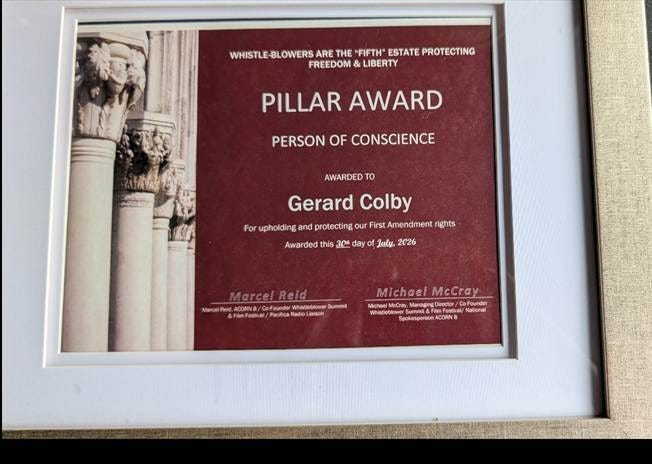
In presenting the Pillar Award, Kreig pointed out that Colby had been the president of the National Writers Union to help protect other writers, including through years of litigation to prove “how and why a publisher can kill an author’s book without the author and sometimes even the editor knowing about because it is done at the highest levels.”
As a quick and notable aside, Kreig said the Justice Integrity Project “looks into theses types of things,” as it was founded by experienced journalists, and one of them was John Kelly, a producer for CBS and NBC for years, but he also worked with the CIA for four years.
“I was talking about Prentice Hall,” Kreig said, “and John Kelly pointed out ‘there’s someone there from the agency.’” Kreig googled it and saw that William Casey, future director of the CIA, had a bit job as a part-time editor of business books – “what a perfect place to keep an eye out for books they don’t like.”[1] Whereupon he turned the mike over to Jerry.
Highlights of Colby’s Address on Receiving the Pillar Award
As he scanned the audience while proudly holding his plaque commemorating him as a “Person of Conscience,” Jerry began by stating how honored he felt “looking at you as brothers and sisters in the struggle for the rights of authors, the rights of journalists, and the rights of the people to know what is going on.. We can’t have a democracy without this.” He reminded his audience of the words of colonial writer and publisher John Peter Zengler, who wrote in 1735, “The Price of Liberty is Eternal Vigilance.”
He proceeded to tell his story of how he got involved in writing about the DuPont Co. and family.
He was working as a press secretary for Congressman John Dow of the 17th Congressional District of New York. “I noticed John was fighting hard against his Republican opponent, the former commander of the American Legion, and that a lot of donations into his opponent’s campaign were from Delaware.
“I discovered the name duPont and began to investigate. They were the original founders of the gunpowder trust. They came from France, and were students of Antoine Lavoisier, who founded the gunpowder mills for King Louis XVI. They were the last people in France to protect the king with swords drawn. Then they fled from France. They landed on American shores and broke into a house while the occupants were at church and stole their food. Accounts differ as to whether they left a gold coin before moving on to Delaware to found the gunpowder mills along the Brandywine River.”[2]
From gunpowder in the 19th century they moved in the 20th century into heading General Motors, manufacturing autos, paints, and weapons, and then focusing on chemicals, producing rayon, nylon, and artificial rubber. They are most known today for discharging from their facilities PFOA, the toxic “forever chemical”[which never breaks down in the environment] used in Teflon, contaminating the drinking water of an estimated 200 million Americans.
The Du Ponts, he learned during his research, were the major figures in fighting the famous sit-down strike by UAW workers in 1937 at their General Motors plant in Flint, Michigan.
“So I went into the Eleutherian- Mills Hagley Foundation Library, the DuPont Library located above the old Brandywine gunpowder mills in Wilmington. I uncovered correspondence between Governor Frank Murphy of Michigan and the Du Ponts. They were asking Gov. Murphy to pull out the National Guard and set up machine guns to fight the strikers . Frank Murphy refused, thank God, due to FDR’s intercession, who declared that the UAW had the right to engage in collective bargaining.
“Suddenly the librarian pulled this document out of my hands. It turns out he was providing information about me to the du Ponts.”
Colby went back to finishing his book, which took him five years. He waited toward the end of writing to contact the company and family members for interviews. They declined, but behind the scenes, alarm bells began to go off. “Who is this guy?” queried. Irénée du Pont, Jr. the family patriarch.
DuPont Company launched an investigation. and got Prentice Hall to leak a copy of the manuscript to a du Pont- affiliated bookstore in Wilmington, Delaware.

Irénée duPont died in 2023 at age 103. Credit: Delaware Online
The Infamous Phone Call to Book of the Month Club
“And then one day I got a call from my editor Bram Cavin who took me out to lunch. He said there’s big trouble. Prentice Hall got a call from the Public Relations Department of DuPont Co. who said the book was ‘scurrilous and actionable’ --in other words, threatening a lawsuit. I said wonderful. Let’s call a press conference. Bram said Prentice Hall wouldn’t do that.”
“Next I learned that Book of the Month Club had been contacted by DuPont Company and dropped the book from its’ business-oriented Fortune Book Club in an unprecedented 24 hours. I thought, Boy, that’s another reason for a press conference! His audience chuckled, knowing that interference with a book is normally a writer’s dream to gain publicity. But his “Banned in Boston” dream was short-lived.
Instead, Prentice Hall began to privish the book, cutting its ad budget, the author’s tour and book run “so it couldn’t price profitably under any conceivable formula,” as he later discovered during his lawsuit in a memo from a Prentice-Hall official. He sued Prentice Hall for breach of contract and DuPont for inducing breach of contract. (Note: this was not a First Amendment case because the government was not doing the censoring).
“Thanks to my wife, Charlotte,” he continued, “she found an editor at Viking, William Decker, who was willing to testify in court about privishing.”
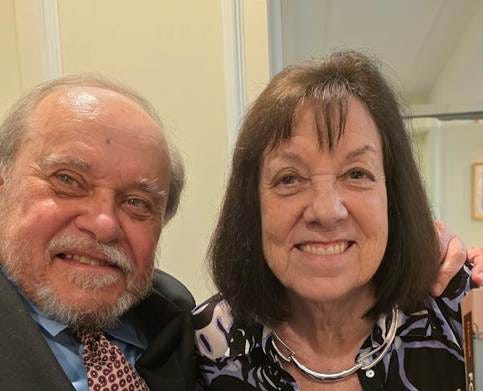
Colby and Dennett at Whistleblower Summit. Photo: Jerry Ashton
Decker admitted that privishing was well known in the industry but is not known to authors. His testimony was key to convincing federal judge Charles Brieant to find Prentice Hall liable for privishing the book. As for DuPont, the judge demurred. Jerry sensed problems when the family patriarch, Irénée duPont, Jr. took the stand, “and the judge stepped down from his dais and went over and turned on the light for him so he could read a document. I turned to my lawyer, Ron DePtris, and whispered, ‘We’re in big trouble, boy!’”
‘We finished the trial. It lasted two weeks. Not one bit of coverage by the media “
He later learned that after the trial ended, the Judge addressed the opposing attorneys in chambers.
Judge Brieant said he was not going to find the du Ponts, a “pillar of American society,[3]” liable “for expressing its opinion of the book.” (This, despite the fact that DuPont had threatened a lawsuit against Prentice Hall. Wasn’t that inducing a breach of contract?) “But you, Prentice Hall, you will publish it, not privish it.”
Prentice Hall offered to settle for a paltry $24,000 “as long as I kept quiet about privishing.” Jerry refused, and appealed against both Prentice Hall and DuPont to the U.S. Court of Appeals in the Second Circuit. The Court sided with both DuPont and Prentice Hall in a lengthy opinion, most notably disagreeing with District Judge Brieant that “the contract in question obliges P-H “to use its best efforts to promote the book fully.’”
The ACLU appealed the case to the U.S Supreme Court, which denied cert.
Still, the case is viewed as something of a landmark in legal and publishing circles, highlighting how publishing contracts are interpreted regarding promotional efforts, requiring a balance between a publishers’ discretion with a duty to support authors’ works adequately.
Publishers may be loathe to put in their contracts a clause requiring their “best efforts to promote the book” but that doesn’t mean authors shouldn’t try to advocate for this wording.
Jerry ended his acceptance speech urging writers to familiarize themselves with privishing, reminding them again of John Peter Zengler’s warning: “The Price of Liberty is Eternal Vigilance.”
[1] Jerry and I also discovered that Prentice-Hall’s editor in chief, John Kirk, had worked for two publishers with CIA ties: The Samuel Walker Publishing Company and the Free Europe Press (the publishing arm of the CIA-funded Radio Free Europe.]
[2] When Irénée du Pont testified in trial, he never mentioned being upset over charges that the DuPonts were widely known as the Merchants of Death for their millions in profits from WWI, or that their chemical plants spewed carcinogens and polluted the rivers of West Virginia, where Irenee was once plant manager in the 1980s Instead, what troubled him was the perceived affront to the family’s proud history and the impact it would have on is children by suggesting that the newly- arrived immigrants failed to leave a gold coin after stealing the churchgoers’ food.
[3] Oh, the irony! Who could have guessed that the perceived enemy of America’s “pillar of society,” would be awarded the Pillar Award at a Whistleblower Summit decades later. Hats off to Marcel Reid, co-founder and co-host of the Whistleblower Summit, for making this happen.
Ms. Dennett, I replied to your message and sent an email.
So interesting. Thanks for this account. But why would a publisher publish the book in the first place, with no intention of promoting it or selling it?